Community Cluster

Strengthening Neighbourhoods

Mesh Asset enables latent resources in the neighbourhood to be utilised in a secure manner.

For more details on "alternative networks" like Virtual Private Mesh please refer to

Virtual Private Mesh provides a mesh of Virtual Private Network (VPN) under different ownerships with restricted and audited traffic.

Broadband Comparison

Using Australia's National Broadband Network as a comparison, a neighbourhood based Virtual Private Mesh can decrease cost and increase performance by reducing neighbourhood traffic from 11 hops to just 1 hop.
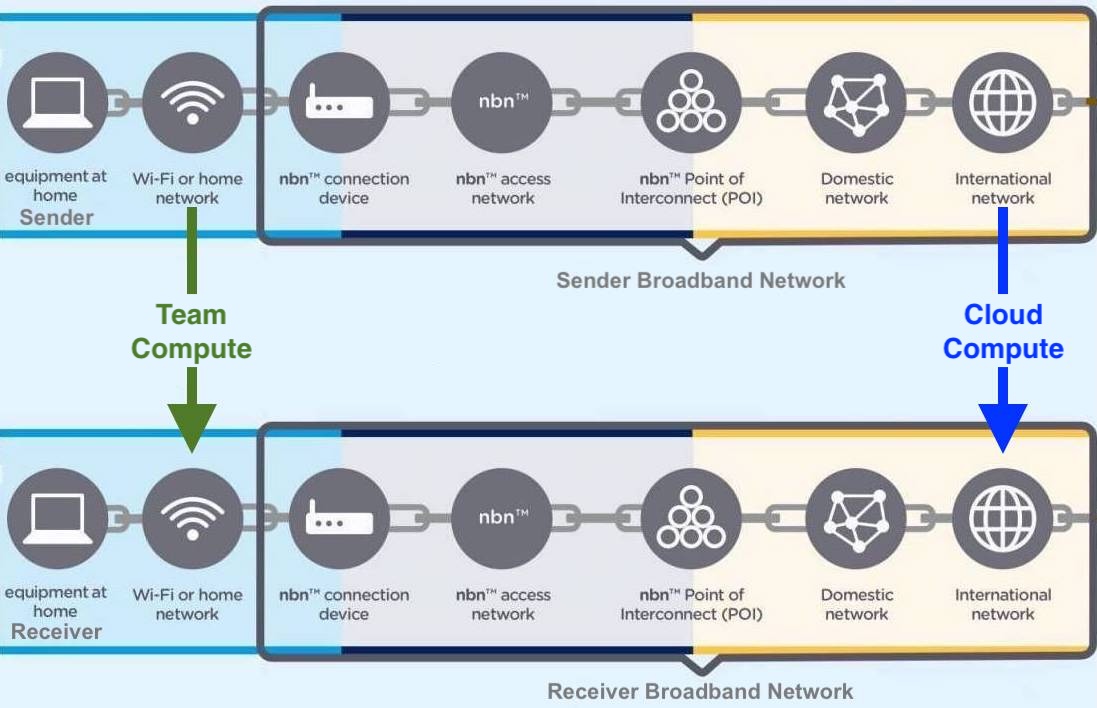
Community Cluster facilitates cheap aggregation of unreliable infrastructures. Evolve from a passive user to an active OWNER of infrastructure. Leverage latent resources worldwide (unused storage, bored retirees etc.), gain Privacy, Scalability, Reliability not possible on Cloud Infrastructures.

In order for Team Compute to be self-funded, it is important that software deployed by the Compute Owner is made profitable.
Software is includes data and the compute code used to process them, it is the sole of Team Compute.

leveraging compute and data across billions of devices worldwide to gain unprecedented productivity

EVERYONE (from refugees to billionaires) can now benefit fully from the value of their data play active roles in the digital economy.

All organisations and individuals can now play active roles in the digital economy and benefit fully from the value of their data, by leveraging compute and data across billions of devices worldwide to gain unprecedented productivity.

The Internet's original design of facilitating distributed compute ownership is restore, data can flow directly without detouring through the Cloud Bottleneck, the VALUE of your data now remains with you.

All Frequencies

Just like 5G mobile cellular networks, Team Compute networks covers low, middle and high frequency bands also.

5G Cellular 5G Frequencies 5G Speeds
5G Low-Band 600 MHz - 1 GHz 50 Mbps - 250 Mbps
5G Mid-Band 1 GHz - 6 GHz 300 Mbps - 1 Gbps
5G High-Band 24 GHz - 47 GHz 1 Gbps - 20 Gbps
Team Network Team Frequencies Team Speeds
Lora 868 MHz - 928 MHz 1 kbps - 37 kbps
WiFi 2.4 GHz - 6 GHz 150 Mbps - 23 Gbps
Point-to-Point 60 GHz 500 Mbps - 5.4 Gbps

See all 3 frequency bands deployed on the roof of the building.
Community WiFi

Community Cluster is based on the Community WiFi concepts, it simply expands its scope to including collaborating on many other resources, not just networking.

1. Existing Community WiFi

There are many Community Networks around the world, for example in Germany, Greece, Spain, USA , Austria, South Africa etc.

It is interesting that similar community wireless efforts which will be most useful in less developed countries (e.g in Nepal) has stopped while they are still going in more advanced countries (e.g. from wifi hobbyists in Australia to farmers in Italy to low income families in USA).

Area Mesh pushes high tech collaboration between citizens to the limit, from reporting pot holes on the road to helping elderly do shopping.

2. Existing Mobile Carriers

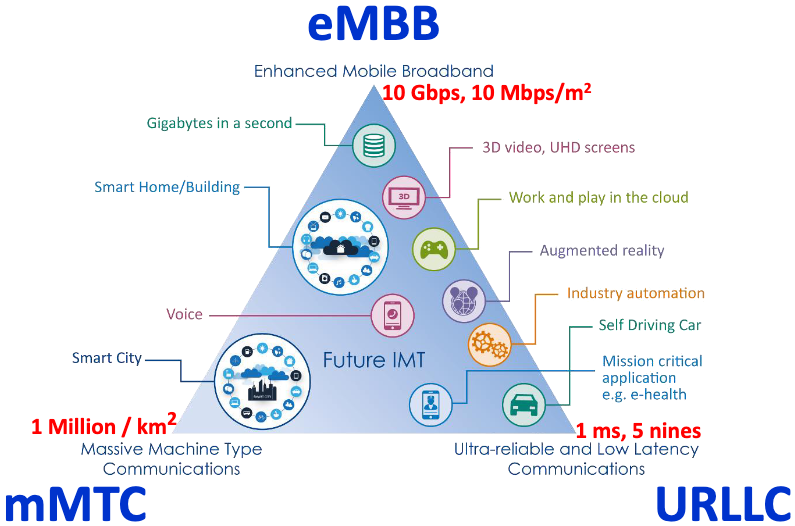
Most mobile carriers are migrating to 5G in order to to gain improved capacity (eMBB), latency (URLLC), density (mMTC).


source: dspcsp

One important feature of 5G not commonly list (e.g. missing above) is it positioning ability, which was first introduced in 5G release 15 in 2017 (target accuracy 50m) with increasing accuracy and capability in every following release (the latest 5G release 18 in 2024 has target accuracy of less than 0.5m). Deployment of 5G positioning in the field is still very limited due to reliability, cost, power consumption etc.

5G's carrier centric approach relies on carrier built infrastructure (e.g. mobile towers, fibre backhaul etc.) and carrier defined services (e.g. URLLC, eMBB etc.).

Area Mesh complements those same 3 service areas

Scaling Up Community Networks

Community Cluster provides communities large or small with their OWN physical and virtual networks.

Using the revolutionary Team Compute paradigm , Community Cluster removes the skill and cost barriers to the building and operating of Community Networks by dividing the network up into fixed size cells.

Area Mesh enables you to turn those annoying wifi signals from your neighbours into an indoor geo-positioning system or use those wifi as backup links when you own internet link is down.

Besides enabling communities to create of millions of application and community specific Virtual Clusters (at the IP level), Community Cluster Compute Assets.

1. Roof Stations

A secure and private communication network is required to underpin collaboration between citizens.

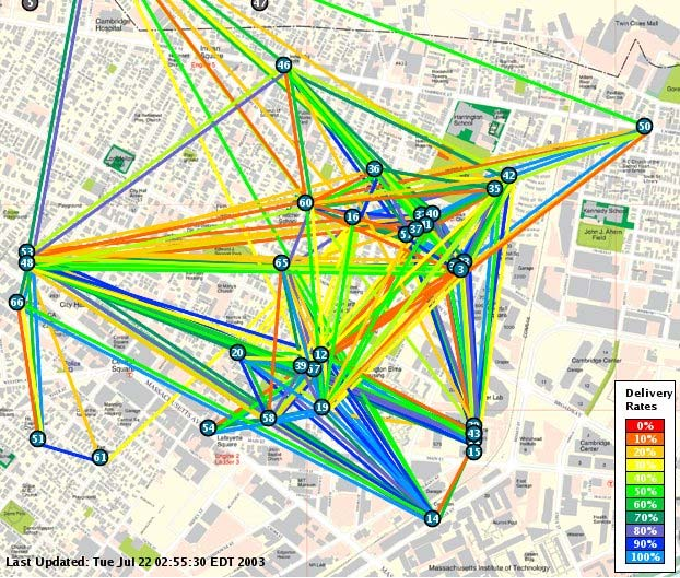
The MIT Roofnet is an early example of a roof based network where radios on the roofs in the neighbourhood talk to each other, forming an independent high speed data network.

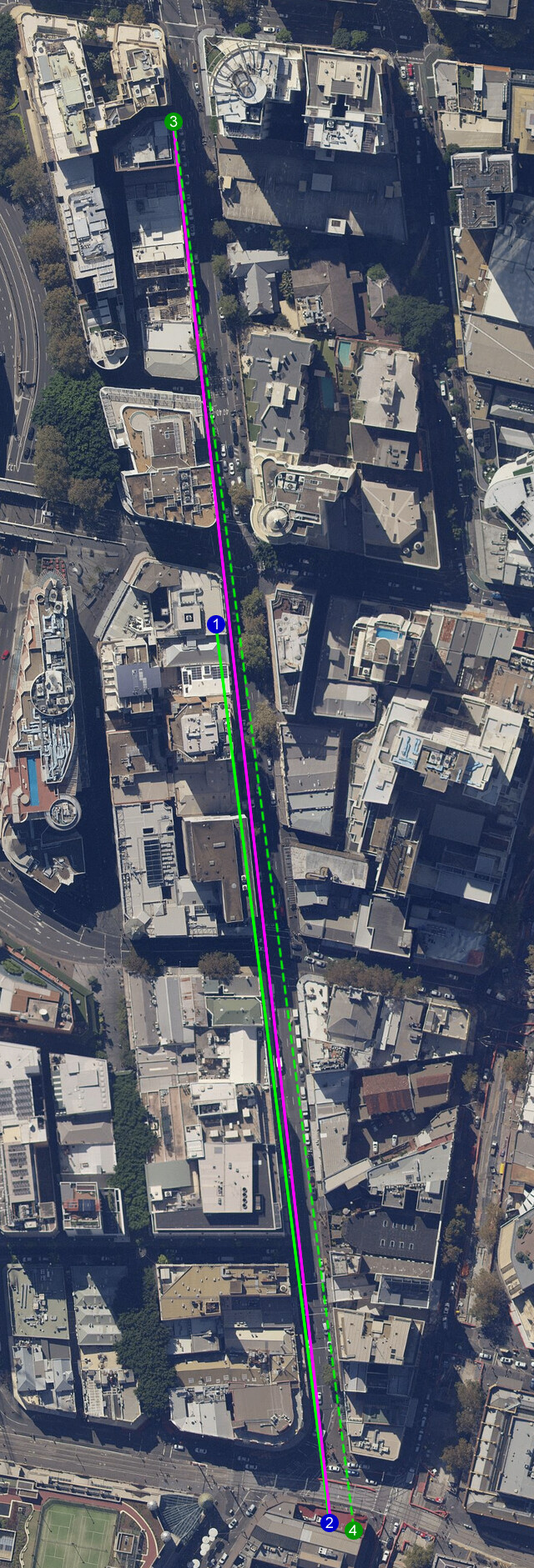
A radio mesh on the roof is cool since we can also interact with Unmanned Autonomous Vehicles (UAVs) easily on the roof e.g. refuelling them like in Float Mesh nodes. However, the installation of equipment, line of sight requirement etc. make it very difficult to achieve wide adoption. We started on the roofs of some buildings in Sydney using Australian WiFi Frequencies and Australia LoRa Frequencies.

About a year after we have linked 3 buildings (points 1, 2, 3 in above image) together with roof top radios, a new hotel was built in the middle blocking the WiFi signals between point 2 and 3. We now have to install another radio at point 4 in order to maintain roof top connection between all 3 buildings (this installation might be part of the planned 2022 year end meet up in Sydney).

As can be seen, roof node s can be challenging to deploy and operate.
For cities that have 4G in the air and fibre in the ground, we have put the deploying roof top radios on hold. We are still using radio mesh in other cases e.g. Float Mesh and Water Pile, but Virtual Private Mesh over the Internet, which can be deployed with just one command, is now the preferred method linking citizen sites within cities together.

2. Window Stations

With increasing restrictions on UAVs in the city, the advantages of placing Nearby Mesh Nodes on the roof have reduced. And as can be seen in our Roof Top deployment above, building up such a network can be difficult.

However, placing indoor nodes near a window and outdoor nodes on a balcony can still be viable, we will need to investigate that next.